
- Streamlit
- Interface
- .docx
- Output
- 2024
- Year
Overview
Most educational content is now in video form. But video is the hardest format to work with: you cannot annotate it, search it or quote from it.
This tool takes a YouTube link as input, extracts the audio channel and converts it to text through speech recognition. The resulting transcript is arranged into paragraphs and downloaded as a Word document. For students it means turning lecture videos into notes; for researchers it means making talks and panels quotable.
The application was built on the same core as the audio transcript tool; the only difference is the input source. That shared structure lets both tools be maintained together.
Highlights
- Transcript generation straight from a video link
- Readable output arranged into paragraphs
- Download as a Word document
- A shared core with the audio transcript tool
Objectives
- Make video content searchable and quotable
- Speed up note-taking from lectures and conferences
- Build the shortest possible flow driven by one link
Solution
- Extracting the audio channel from a link
- Converting to text with speech recognition
- Paragraph segmentation for readability
- Document generation and download
Approach
- 01Reusing the shared core from the audio tool
- 02Adding the link processing layer
- 03Testing across different video lengths
Outcomes
- Video content became archivable as text
- Note-taking time dropped noticeably
- Both tools are maintained from one code base
Challenges
- Managing processing time for long videos
- Accuracy on videos without subtitles
- Making paragraph segmentation meaningful
Selected Work
Similar projects
Voice Transcript App
A Streamlit application that generates automatic transcripts from uploaded audio files and lets you download the result as a Word document.
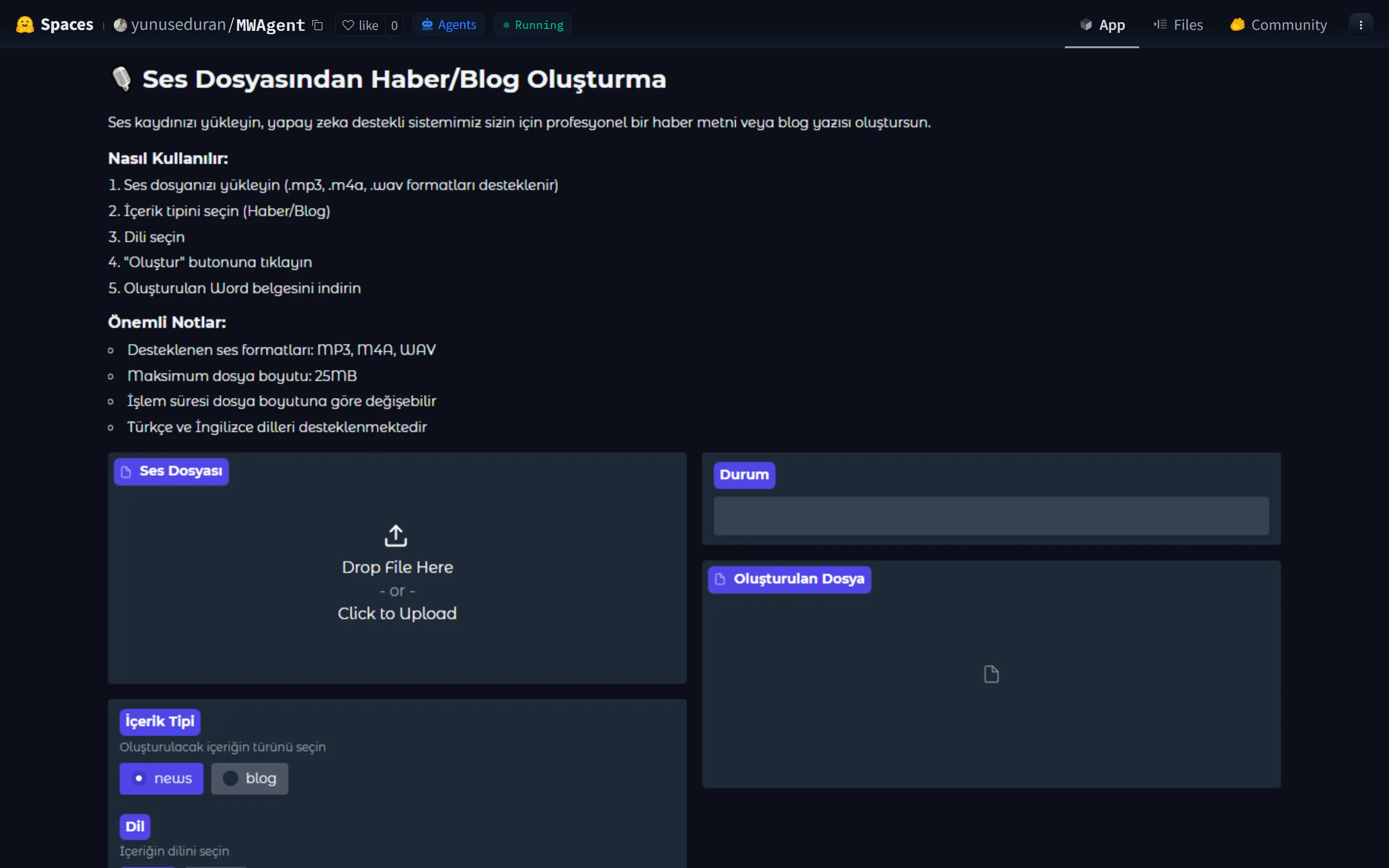
Audio-to-News-Article Agent
An AI tool that turns an audio recording first into text, then into a structured news article, combining speech recognition and natural language processing in a single pipeline.
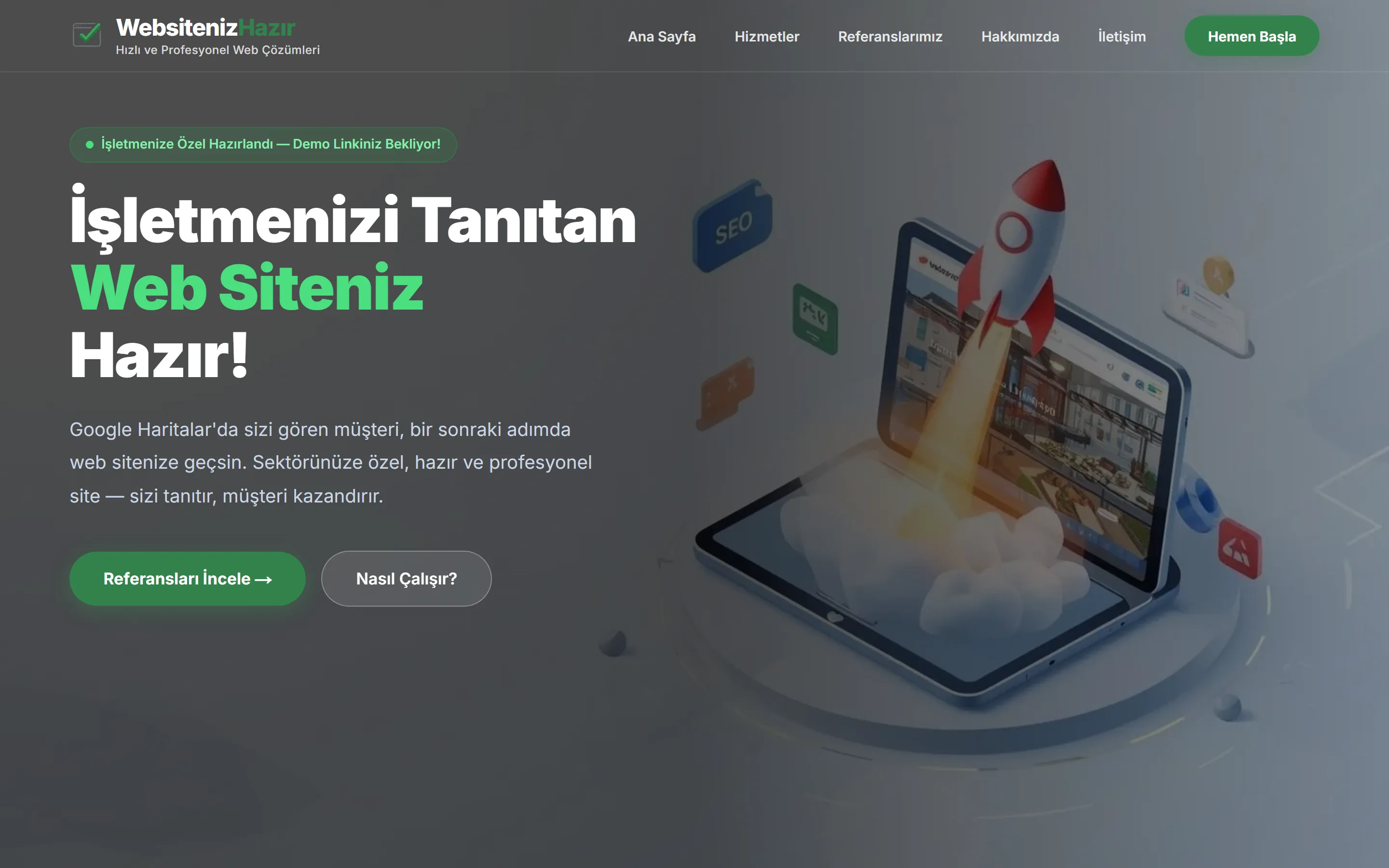
Websiteniz Hazır
A service that produces sector-specific demo websites for businesses visible on Google Maps but without a site of their own. The demo is free and delivery takes 24 hours.